
What the Pile on Your Table Is Telling You.
The dining room table in my house has not been used for dining in longer than I want to admit. Actually, Christmas, if I’m being completely honest, was the last time we sat down at that table.
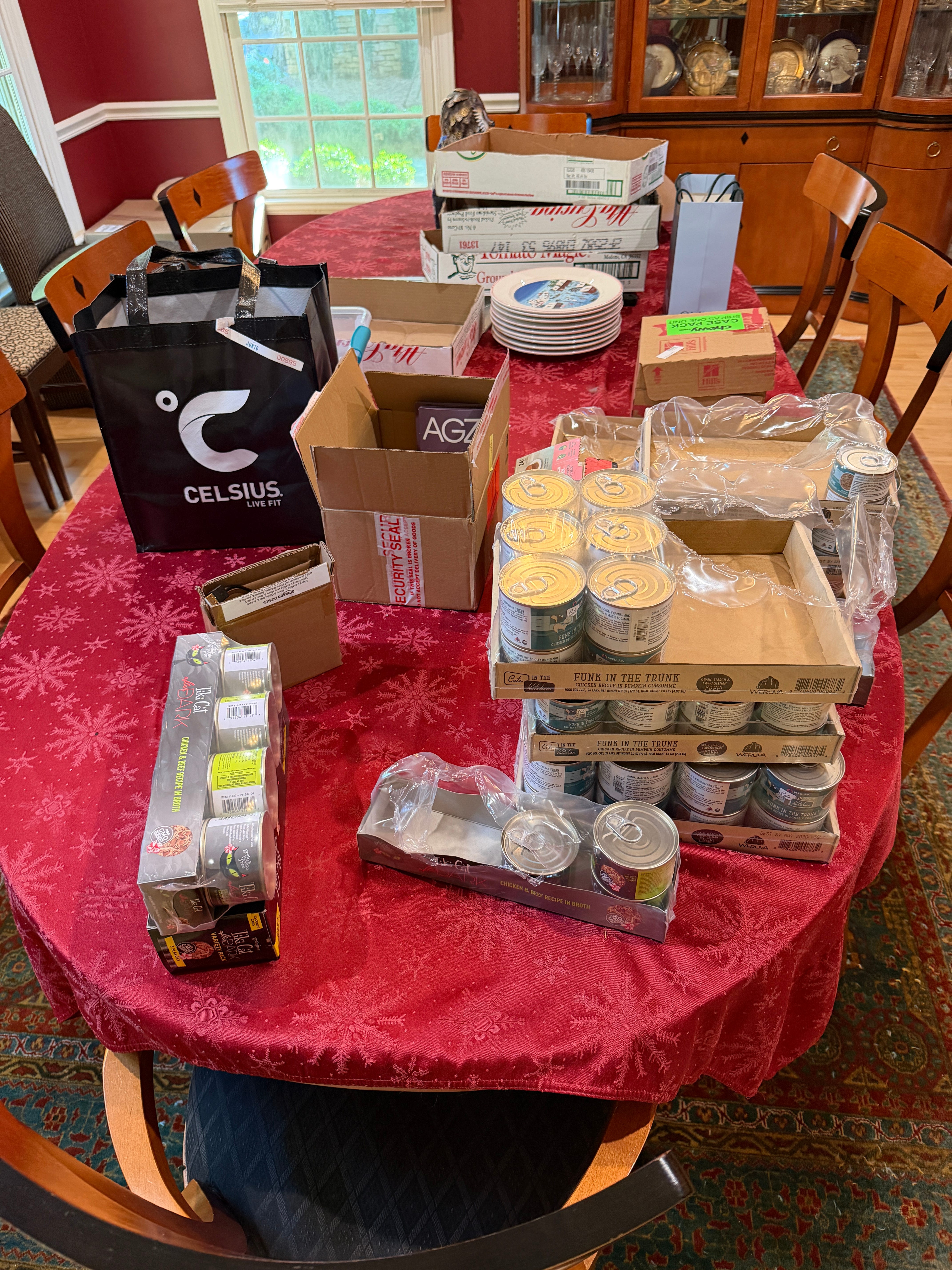
Right now, it holds a stack of packages that came in the mail and haven’t been opened yet. A bottle of supplements that did not fit back in the pantry. Three things that belong somewhere else in the house but somehow made it to the table and stopped there. And all the cat food from my last Chewy order. This is not how I envisioned my beautiful dining table in my beautiful dining room existing in my life and home, but I’m being totally honest. That’s what it looks like today as I’m writing this.
I walk past it every day. I see it every day. And every day I think, “I really need to deal with that.”
And then I don’t.
If you have a table like this, or a chair, or a corner of a room, you might tell yourself you are procrastinating. That it is evidence you are lazy or scattered or just not on top of things the way you should be. We are quick to turn a pile of stuff into a character verdict. Sometimes, in our own heads, blaming ourselves for procrastinating is easier or more manageable than actually starting to fix the problem and taking action on that table.
But here is what I have learned in twenty-plus years of working with women. That pile is not laziness. It is information and feedback. And it is almost always telling you one of three things.
The first is that starting feels too risky. You know that if you open those packages, you might have to deal with a return. If you move the supplements, you have to figure out where they go, and that means confronting the pantry, which is its own problem. The task is attached to other tasks, and somewhere underneath it all is the fear that you will not do it right, or that you simply can’t. So you do not start, and you call it procrastination, when really you are protecting yourself from imperfection. That is a very human response.
The second is that you cannot find the door. The table is not one thing. It is twelve things that arrived from different directions and piled up together, and you cannot figure out which one to pick up first. You circle it. You think about it. You are not avoiding the work. You genuinely cannot locate the starting point, so you leave it for later when, you tell yourself, it will feel more manageable. It rarely does. More things just keep getting added to the pile.
The third is that you are simply out of capacity. Your day is full before it starts. There is no leftover energy for one more decision, even a small one like where to put the cat food. The table is not the problem. The table is a symptom. You have been doing too much for too long, and there is nothing left to give to anything that is not urgent and on fire. The pileup on the table has been managing itself fairly well, so it does not appear urgent enough to make the list.
None of those is procrastination. Procrastination is avoiding something easy. What these piles represent is fear, confusion, or depletion. And none of those get better when you call yourself lazy. The table actually starts to feel harder and harder to tackle the more you talk to yourself that way. Let’s be honest with each other: we all know we are capable of clearing that table.
Here is what does help.
If it is fear, the answer is not to be braver. It is to make the first step so small it does not require bravery. Not “deal with the table.” Just open one package. Set a timer for five minutes. Fear shrinks when the task shrinks.
If it is the missing door, stop looking at the whole thing. Pick one object. Not the right object. Just a real one. Move it. That is your starting point, and it does not have to be perfect. It just has to be a beginning. I tell my clients to pick one item category and focus only on that. In my case, it would be the mail and the Amazon boxes. Just those. Not the cat food, not the supplements, not the random things that wandered in from other rooms. When I finish just that one category, I feel the satisfaction of checking something off, and the table starts to clear. Each category after that feels simpler. We tend to overcomplicate things, and that is often part of the protection too.
If it is depletion, the table can wait. The more honest question is what else on your plate belongs in that pile. What did you say yes to that you no longer have the energy to hold? Creating space is not only about what sits on the table. It is about what you are carrying in your head and your schedule and your sense of obligation. Sometimes you have to put something down before you can pick anything else up. What this sounds like is: I just don’t have time for that today. Or: I can’t even think about the dining room table right now. That is feedback. Maybe there is something on this week’s schedule that belongs on next week’s list instead. Create a little space for yourself first.
The story you tell about that table matters more than the table itself. The story that says you are lazy keeps everything exactly where it is. The story that says you are protecting yourself, or overwhelmed, or just need one small starting point, that story gives you somewhere to go.
So whatever it is in your life, your dining room table, your calendar, a pile of things you keep meaning to start, try not to call it procrastination. Try calling it information. Because this is where things begin to shift: when we start to see our actions, and our inaction, and our environment as feedback about what is going on inside us. That pile is not a character flaw. It is a message. And once you know what it is saying, you can actually do something about it.
I would love to know: what in your life is your dining room table right now?
Start there.
If you are ready to figure out what is actually in the way and what to do about it, I work with women one-on-one to do exactly that.